

In canines, liquid biopsies can detect the presence of cancer through the released circulating tumor DNA (ctDNA) in the bloodstream. However, liquid biopsies often struggle in detecting certain cancer types and are prone to false-negatives, especially in early-stage canine cancers. To improve these shortcomings, our research examines certain biomarkers to minimize the false-negative results, notably focusing on aggressive and fast-acting canine cancers. Our research aims to genetically engineer E. coli bacteria to fluoresce in the presence of MiR-214, a biomarker associated with hemangiosarcoma (HSA)- an aggressive and rapidly progressing cancer common in canines. Our findings ensure a significantly more reliable and effective alternative liquid biopsy, while maintaining a relatively cost-effective diagnostic.
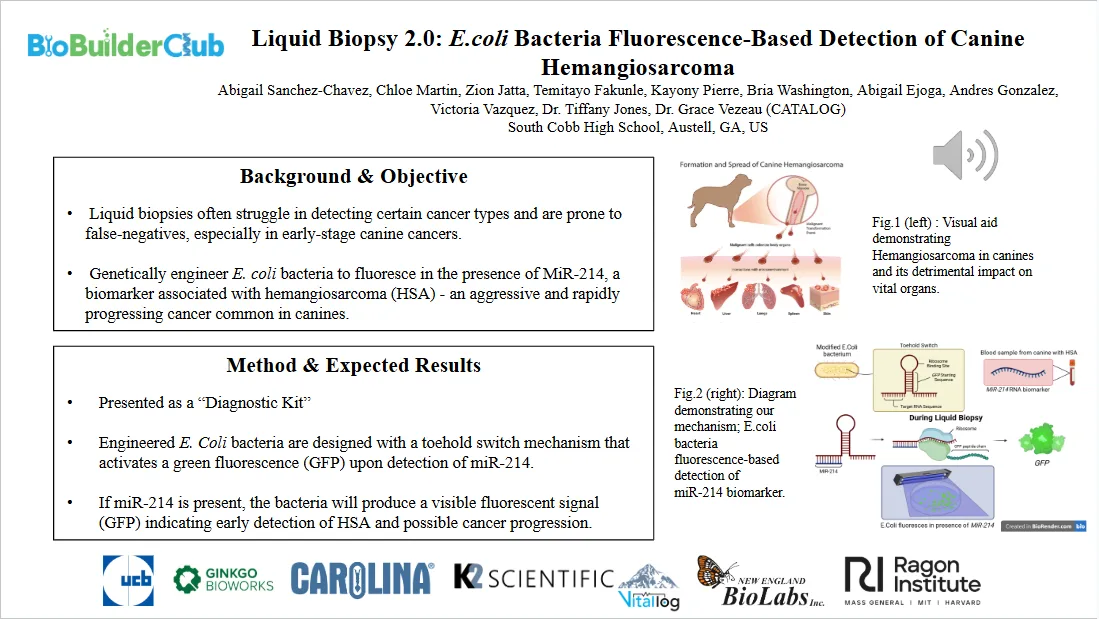
Liquid Biopsy 2.0: E.coli Bacteria Fluorescence-Based Detection of Canine Hemangiosarcoma
School
South Cobb High School
Austell, GA
BioBuilderClub Season
2024-2025 Season
Category
Resources