

Silk fibroin is a promising biomaterial for bone grafts that could revolutionize the healing of bone injuries and defects. Our research aims to develop a bioengineered composite material for bone grafts by genetically engineering Escherichia coli (E. coli) to produce the fibroin heavy chain (Fib-H), a key silk fibroin protein, as a sustainable alternative to natural silk. We designed a gene sequence containing sixteen repeated motifs of alternating hydrophobic and hydrophilic residues (GAGAS). We introduced this recombinant gene into E. coli for protein expression and production and are in the process of obtaining preliminary results. Simultaneously, we developed an initial method to solubilize silk fibroin from silkworm cocoons which showed successful polymerization of methacrylated silk fibroin crosslinked by UV exposure; the resulting silk fibroin will be used to test 3D printing compatibility. Future work includes refining Fib-H expression, testing the mechanical properties of the 3D-printed scaffolds, and evaluating their biocompatibility. By integrating synthetic biology and materials engineering, we aim to develop a sustainable and effective silk-based bone graft to enhance bone regeneration.
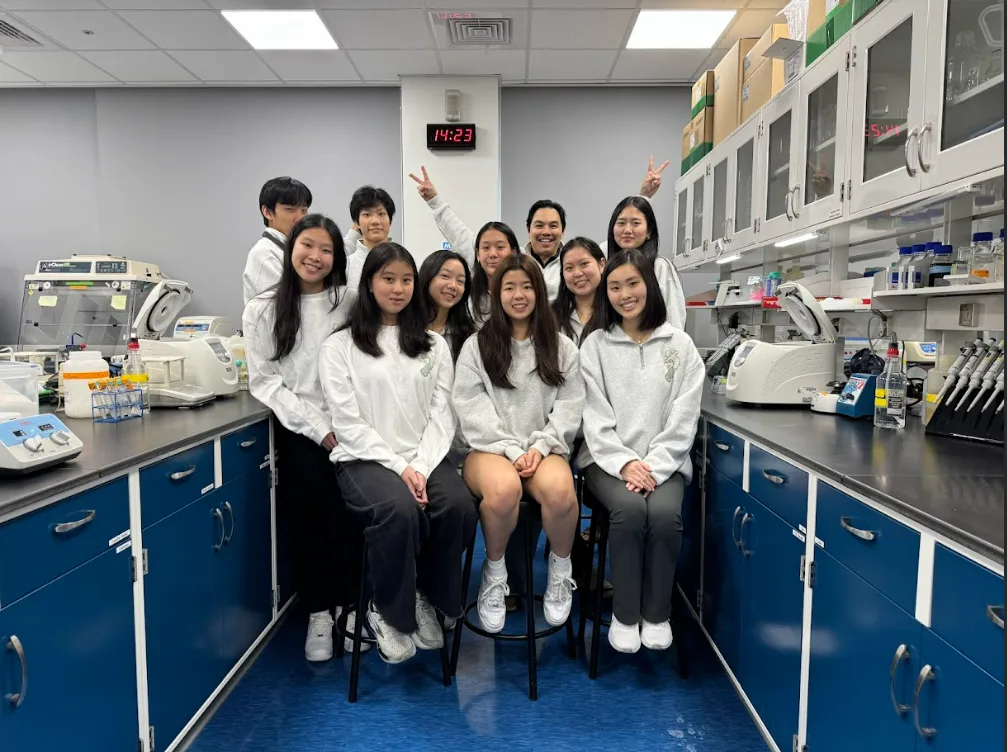
FibroGraft: Synthetic Silk Fibroin for Bone Graft
School
Taipei American School
Taipei, Taiwan
BioBuilderClub Season
2024-2025 Season
Category
Resources
BBC Poster_TAS Taipei A5_TAS_2025