

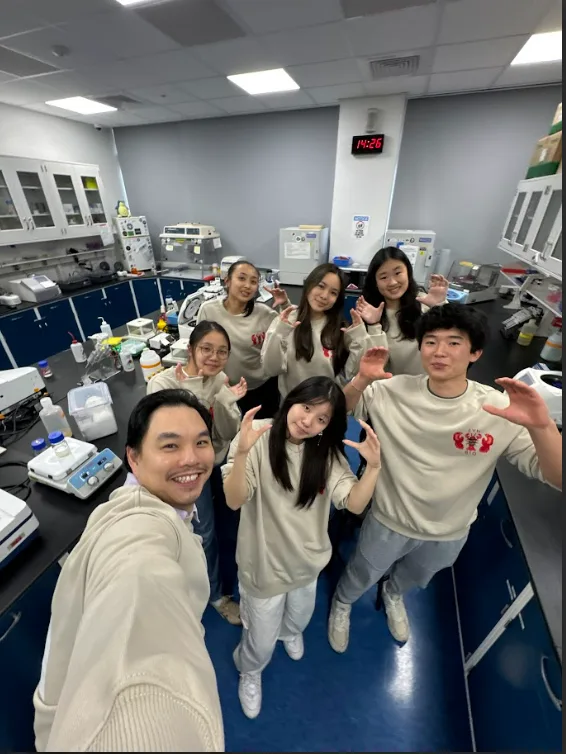
Chitin, a naturally occurring biopolymer with high tensile strength, has the potential to serve as a sustainable alternative to Kevlar in bulletproof vests. This research focuses on the synthetic fabrication of chitosan fibers derived from chitin and their potential application in protective gear. We aim to produce bacterial chitin by cloning the yeast CHS3 gene, which encodes chitin synthase, into E. coli, enabling enzymatic conversion of UDP precursors into chitin. We then deacetylated chitin to form chitosan, which enhances the polymer’s strength and stiffness while also improving its solubility and versatility for diverse applications.
To process chitosan into usable fibers, we utilized electrospinning, combining chitosan with polyethylene oxide (PEO) to enhance spinnability. Additionally, we experimented with direct chitin processing by using formic acid to fabricate fibers and thin films via syringe extrusion and spin coating. We observed that acetone treatment softened the material, reducing its durability, while air-dried samples exhibited greater structural integrity. Using scanning electron microscopy (SEM), we compared our synthesized chitin with naturally derived shrimp shell chitin, revealing similar elemental compositions primarily consisting of carbon and nitrogen, though the shrimp shell contained additional elements such as calcium and phosphorus. Our next step is to conduct stress tests to quantitatively measure the strength of our chitin fibers. Ultimately, we hope to incorporate these fibers into a bulletproof vest, creating chitosan-based protection gear!