

Airborne pollen exposure in Atlanta increases respiratory-related ER visits by 8%, disproportionately affecting children, older adults, and individuals with asthma. Current interventions, such as pharmacological therapies, focus on treating symptoms after exposure rather than addressing pollen production at its biological source. At the biological level, pollen maturation in white oak is governed by gibberellin (GA) signaling. When GA binds to the GID1 receptor, DELLA repressors are degraded, enabling pollen development. In annual crops such as tomato, spray-applied double-stranded RNA (dsRNA) has achieved transient and reversible pollen suppression through RNA interference. In this pathway, dsRNA is processed into siRNAs that cleave GID1 mRNA, maintaining DELLA-mediated pollen repression. However, translating this approach to perennial trees is challenging due to thick cuticles, long developmental timelines, and rapid dsRNA degradation. To address these limitations, our approach uses BioClay nanoparticles to protect dsRNA, enabling sustained uptake into plant tissues. Building on validated tomato crop applications, we aim to adapt BioClay-delivered dsRNA for white oak. Project success will be evaluated through qRT-PCR and multispecies testing, quantifying GID1 levels and validating species specificity. Ultimately, the project extends RNAi intervention from annual crops to perennial trees by enabling a scalable, seasonal, and non-transgenic method for mitigating pollen-driven health challenges.
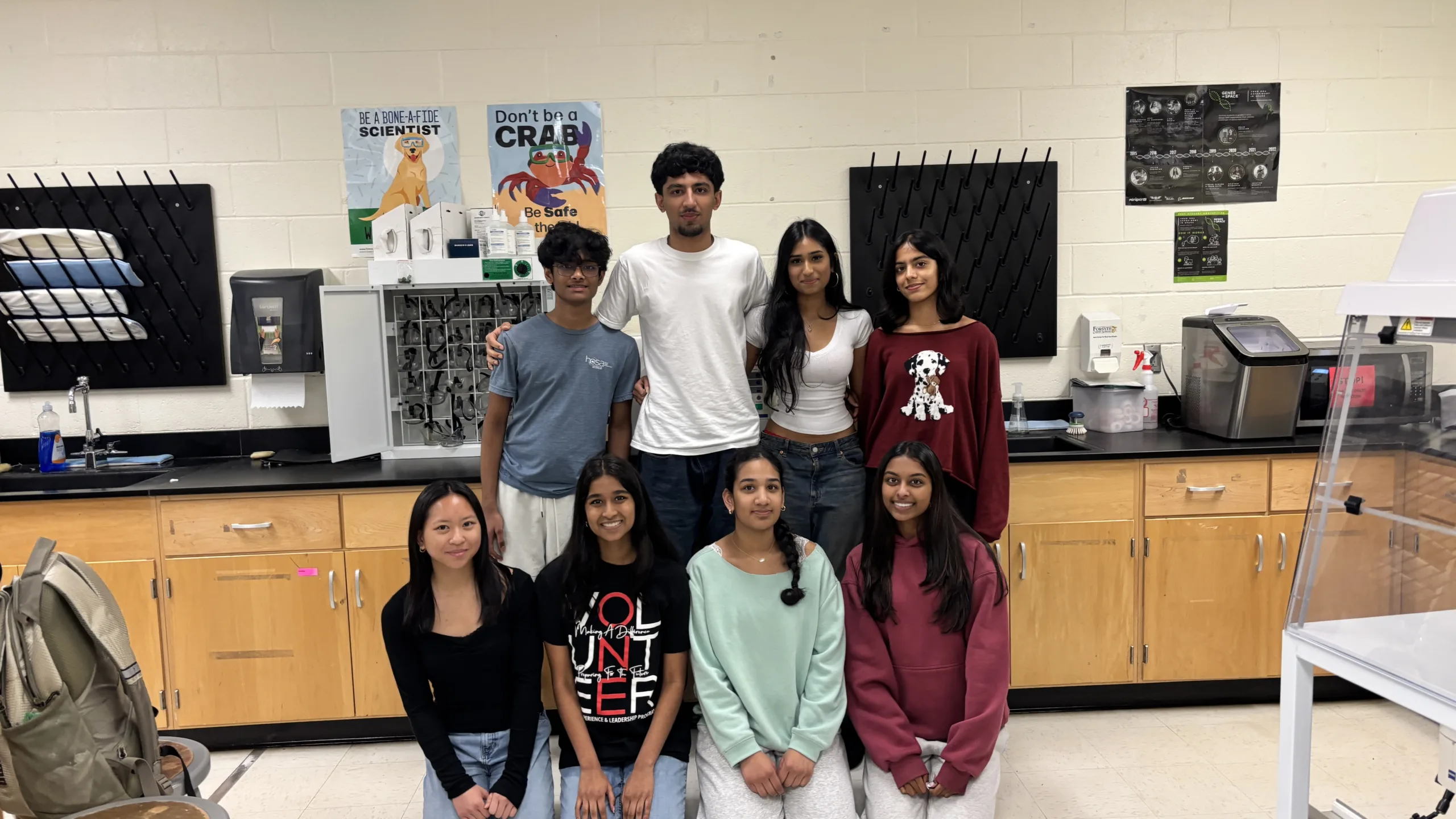
Reducing Urban Respiratory Allergies via Seasonal Spray-Applied BioClay Pollen Suppression
School
South Forsyth High School
Cumming, GA
BioBuilderClub Season
2025-2026 Season
Category
Resources