

Chestnut blight, caused by Cryphonectria parasitica, has devastated American chestnut populations. Early detection of the pathogen before visible symptoms appear is crucial for effective containment and conservation efforts. This synthetic biology project aims to engineer Pseudomonas fluorescens to produce bioluminescence in response to oxalic acid, a key virulence factor secreted by C. parasitica. Using a genetic circuit that links an oxalate-responsive promoter to a luciferase gene, the engineered bacteria will serve as an early biosensor, glowing in the presence of oxalic acid. This bioreporter system could be applied to tree surfaces or soil near chestnut trees to provide real-time, visual detection of chestnut blight before physical symptoms manifest. By integrating genetic engineering, biosensor development, and environmental monitoring, this project offers a novel, low-cost, and scalable approach to forest disease management.
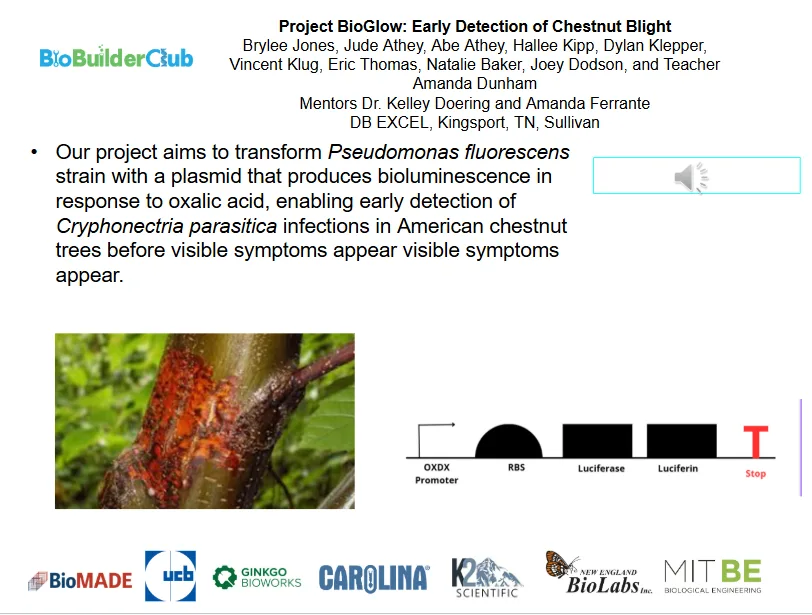
Project BioGlow: Early Detection of Chestnut Blight
School
Dobyns-Bennett Excel High School
Kingsport, TN
BioBuilderClub Season
2024-2025 Season
Category
Resources