

The universal problem of plastic pollution is threatening many ecosystems. Likewise the technology and methods of recycling plastics is truly not sustainable. Even so the organism Ideonella sakaiensis has developed a method of surviving in such environments. Ideonella sakaiensis has two enzymes called PETase (polyethylene terephthalate)ase and MHETase (mono(2-hydroxyethyl) terephthalate hydrolase)ase. These enzymes are responsible for breaking down (polyethylene terephthalate) into mono(2-hydroxyethyl) terephthalate which is further broken down into ethylene glycol (EG) and terephthalic acid (TPA). This process allows for PET plastics to be broken down into less environmentally dangerous products. These enzymes can be taken up by standard Escherichia coli, however standard E. coli is not able to survive such high concentrations of TPA. Because of this, E. coli will need to build resistance to the acid. E. coli is used for duplication of the plasmids but not expressing the genes that cause the production of PETase and MHETase because of the intolerance to TPA. The PETase project aims to first build resistance to TPA in a strain of E. coli and second, insert both PETase and MHETase genes through plasmid uptake.
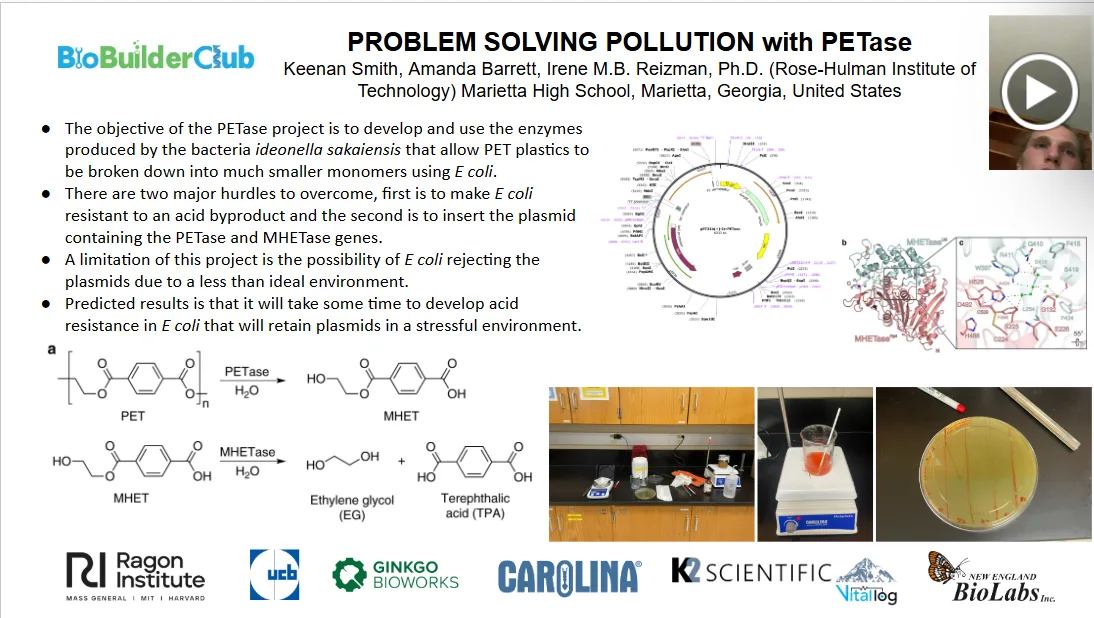
Problem Solving Pollution with PETase
School
Marietta High School
Marietta, GA
BioBuilderClub Season
2024-2025 Season
Category
Resources