

Uncontrolled bleeding continues to be a critical problem in emergency medicine today, thus stopping bleeding quickly and effectively can be the difference between life and death. Traditional hemostatic materials such as gauze and tourniquets are often inadequate in severe cases. Our study explores a novel synthetic biology approach to bleeding control by engineering cells to detect vascular injury and initiate coagulation. We utilize exposed collagen as a biological “danger signal” – a key trigger in the natural coagulation cascade.Based on existing knowledge of platelet-collagen interactions, we propose to use genetically engineered HEK293 cells that activate upon sensing collagen at the site of injury. These cells will secrete laminin 332 to form a protective “biopatch” that promotes basement membrane formation. To improve body compatibility and application efficiency, the engineered cells will be embedded in a collagen-based hydrogel to ensure targeted and sustained hemostatic activity. This approach improves a critical gap in hemostasis technology in high-risk environments such as battlefield first aid and disaster relief by providing self-activating and adaptable solutions. The results of this research will contribute to the development of next-generation biomaterials for trauma management, paving the way for innovative and life-saving therapeutic interventions.
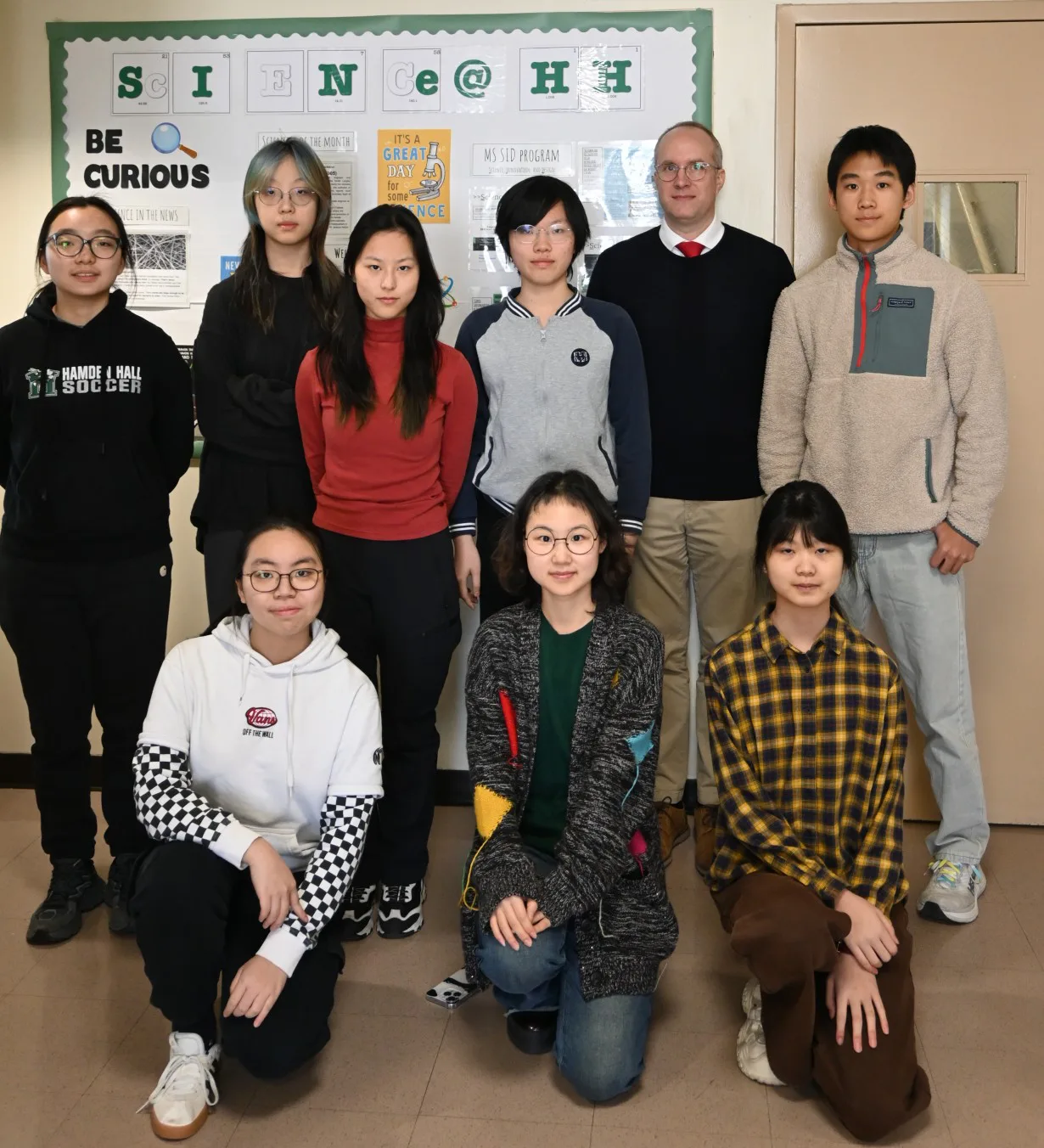
Synthetic Hemostatic Hydrogel
School
Hamden Hall Country Day School
Hamden, CT
BioBuilderClub Season
2024-2025 Season
Category
Resources
BBC_LT_Audio_HH Team_Hamden Hall Country Day School_2025
Copy of BBC LT_HH Team_Hamden Hall Country Day School_2025_Updated_02_03_25
EDITED BBC Poster_Hamden Hall Country Day School_2025